


What comes next for wine grape growers after vines are removed?
LOCAL grape growers are currently facing economic uncertainty after the wine industry has been in decline since the pandemic period and has not fully recovered, with more vineyard owners now seeking more financially viable alternatives.

LOCAL grape growers are currently facing economic uncertainty after the wine industry has been in decline since the pandemic period and has not fully recovered, with more vineyard owners now seeking more financially viable alternatives.
Google Trends data shows Australian search interest in the wine industry fluctuated during the last 12 months and peaked between July 26 and August 1 of 2026.
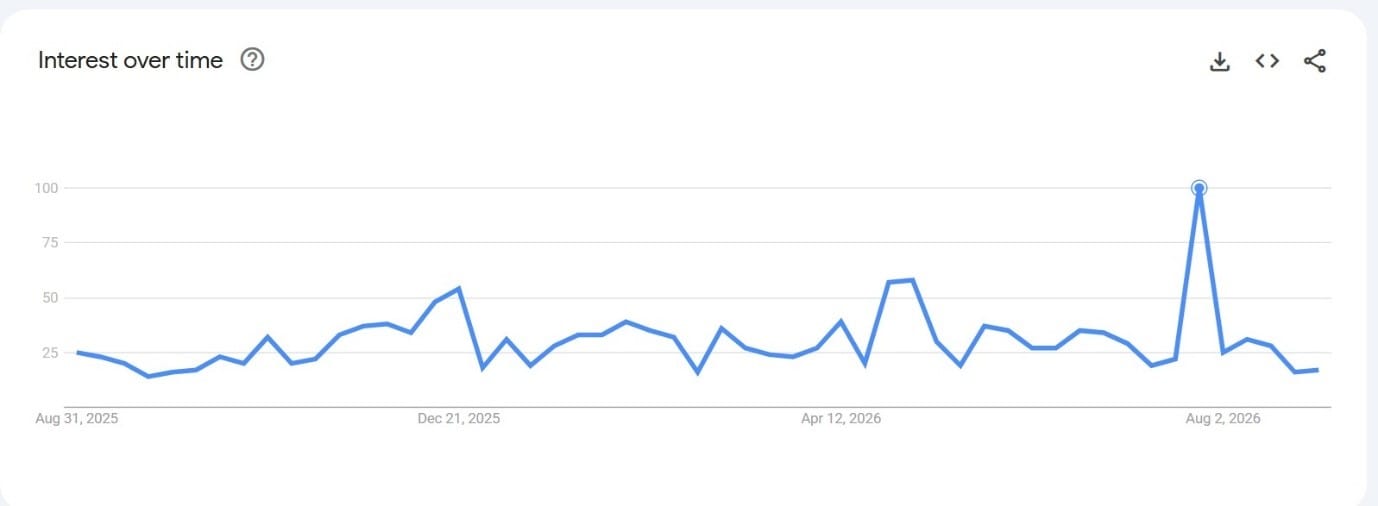
Source: Google Trends
LINK: See Interest over time on Google Trends for wine industry - Australia, Past 12 months - https://trends.google.com/trends/explore/TIMESERIES/1788402600?hl=en-US&tz=-570&geo=AU&q=wine+industry&sni=3
The growing number of wine grape producers around the Riverland removing vineyards in favour of diversifying into alternative crops is concerning local industry leaders and politicians.
Speaking to The Advertiser in July, Riverland Wine chair Brigid Nolan warned the proportion of growers leaving the industry could reach approximately 40 per cent over the next one to two years, amid historically low grape prices and continuing oversupply.
“They’ve either removed (vineyards), turned off or are just walking away,” Ms Nolan said.
“Those numbers are very conservative, and governments think it’s market forces at play, but it’s not – it’s structural, it’s permanent – people aren’t just going to all of a sudden, if grape prices go up, plant grapes again.
“The skill sets and the average age of the people leaving are not coming back. It is more than market forces and it’s happening globally, and I feel that the failure to recognise that is incredibly frustrating.”
Ms Nolan said those producing red grape varieties were particularly being pushed to an economic breaking point.
“I think we’re going to see another 15 to 20 per cent – it’s going to cut down by about 40 per cent at least over the next one to two years,” she said.
“That will be a huge overcorrection but that’s what we’re seeing in the numbers now, certainly for the red grapes.”
The financial pressure is also forcing long-term Riverland growers to consider whether continuing production remains viable.
Interestingly, Google Trends data shows South Australia recorded the highest relative search interest in “wine industry” over the period.
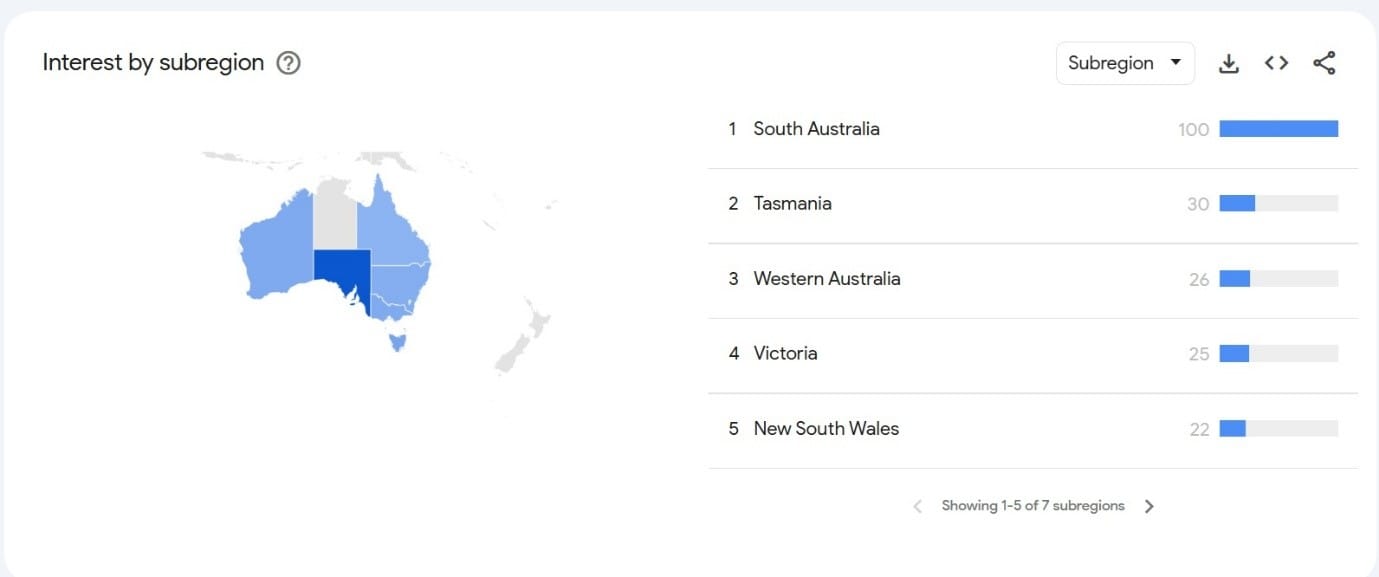
Source: Google Trends.
LINK: See Interest by subregion on Google Trends for wine industry - Australia, Past 12 months - https://trends.google.com/trends/explore/GEO_MAP/1788403200?hl=en-US&tz=-570&geo=AU&q=wine+industry&sni=3
Riverland-based Pike River producer Manvinder Singh said he could no longer wait for the industry's oversupply to recover.
Mr Singh is among a growing number of producers reshaping their businesses as the Riverland responds to prolonged challenges in the wine sector. Through the Transforming the Riverland initiative, growers are exploring alternative horticultural industries and investing in infrastructure aimed at opening new domestic and export market opportunities.
The Maan Park owner said diversifying away from wine grapes was one of the biggest decisions he had made after decades in the industry.
"I wasn't seeing a bright future in wine," Mr Singh said.
"There's an oversupply across the industry, and it could take many years to recover - I couldn't wait that long."
Instead, he looked towards crops he believed had stronger long-term demand.
"I could see people becoming more health conscious. They want to eat well, and that demand isn't going away," he said.
"A lot of growers around here are moving into citrus and almonds because of it - there's real opportunity in the health market, and you can make so many different products from it."
While citrus provided a relatively straightforward transition, avocados represented a longer-term investment.
"Citrus made the most sense to start with - it's easier to manage than wine grapes, and the health market keeps growing, so the demand is there," he said.
"Avocados were a tougher call. They're harder to grow and slower to establish than citrus, but people love healthy food, and avocados are so good for you."
Mr Singh said diversification offered opportunity, but it also required growers to accept significant financial risk while waiting years for new plantings to become productive.
"There's a lot of expense, and not much income for a couple of years while the new crops establish - no income from the wine grapes anymore, and nothing yet from the new orchards either," he said.
"You plant a crop today and you're waiting five years to see it come good, and in that time, anything can happen."
For other growers considering diversification, Mr Singh said success required realistic expectations, patience and a willingness to invest for the future.
"Things are hard right now, and I won't pretend otherwise," he said.
"But I believe in hard work, and in moving forward."
"Projects like Transforming the Riverland are creating opportunities for growers in this region. I believe they're connecting us to better markets and better prices."
It is important to know that Google Trends shows relative search interest, not raw search numbers. This means a score, ranking or trend line should not be treated as the number of people searching. It is a way to compare interest over time, between topics or across locations.
This article was produced as part of a Google Trends licensing initiative. It uses Google Trends data to explore search interest in “wine industry” in Australia.
Google Trends data is aggregated and anonymous. Search interest is measured on a relative scale and does not represent total search volume.”
This content is part of a paid partnership with Google to promote Google Trends.


