

How can the grain industry better prepare for future disruptions?
The report examines the potential impact of disruptions on grain production, national food security and the economy, applying the Grey Rhinos risk management matrix to the grain industry.


THE question comes after the release of GrainGrowers’ High Impact Risks to the Grain Sector Report, which calls for greater collaboration between industry and government to better prepare for potential disruptions to grain production.
Google Trends data shows South Australia recorded the second-highest relative search interest for “grain” nationwide over the past 12 months, closely behind Victoria.
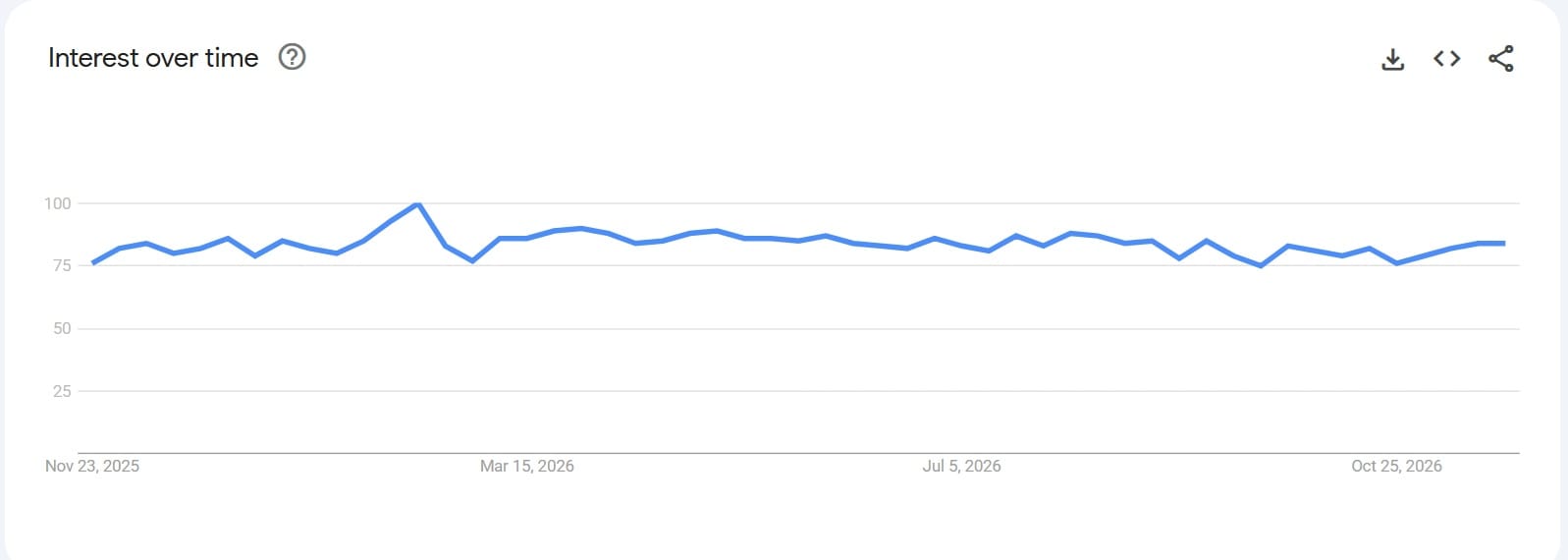
Source: Google Trends
LINK: See Interest over time on Google Trends for grain - Australia, Past 12 months - https://trends.google.com/trends/explore/TIMESERIES/1795839000?hl=en-US&tz=-630&geo=AU&q=grain&sni=3
The report examines the potential impact of disruptions on grain production, national food security and the economy, applying the Grey Rhinos risk management matrix to the grain industry.
GrainGrowers CEO Shona Gawel identified recent fuel and fertiliser supply and cost issues as examples of risks facing the industry.
“The Grey Rhino animal matrix pertains to fast-moving risks that are right before our eyes, but there is a view that industry isn’t adequately prepared to respond,” Ms Gawel said.
South Australia recorded the second-highest relative search interest for “grain”, with Google Trends data showing varying levels of interest across Australian states and territories.
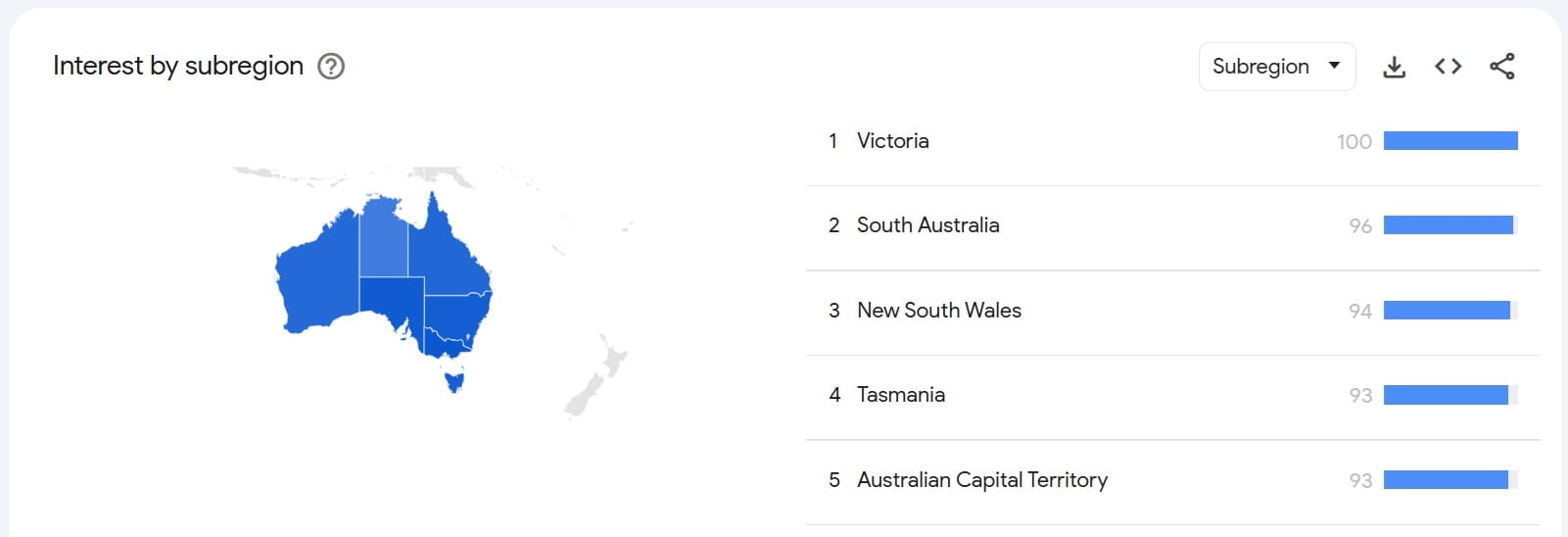
Source: Google Trends
LINK: See Interest by subregion on Google Trends for grain - Australia, Past 12 months - https://trends.google.com/trends/explore/GEO_MAP/1795839000?hl=en-US&tz=-630&geo=AU&q=grain&sni=3
“Unfortunately, as GrainGrowers was working on this paper, one of those risks - the vulnerability of input supply chains - became a reality when the Middle East conflict began,” Ms Gawel said.
“The Government and industry sprang into action to address the immediate threat, but we could have been better prepared.”
Other examples of risk events covered in the report include the detection of khapra beetle in Australia in 2025; the AdBlue shortage of 2023; and the industry’s growing dependency on digital infrastructure.
Ms Gawel said the paper was not meant to solve each risk but does demonstrate how better awareness, preparation and collaboration will help mitigate the severity of future events.
“The risks identified in the paper are well-known, but the piece we are lacking as an industry is the joint approach to better prepare and manage each individual risk,” she said.
“Preparing for these risks requires a coordinated industry-wide effort, as no single organisation has the capacity to address every challenge on its own.
“Building industry resilience requires a collective understanding of the risks and commitment from all stakeholders to play their part in preventing or mitigating their impacts.”
While Google Trends data highlights South Australia’s relatively high search interest in grain, the report emphasises the need for greater collaboration between the grain industry and government on risk management, better awareness and understanding of existing and emerging risks, and improved preparation to mitigate the severity of future disruptions.
It is important to know that Google Trends shows relative search interest, not raw search numbers. This means a score, ranking or trend line should not be treated as the number of people searching. It is a way to compare interest over time, between topics or across locations.
This article was produced as part of a Google Trends licensing initiative. It uses Google Trends data to explore search interest in “grain” in Australia.
Google Trends data is aggregated and anonymous. Search interest is measured on a relative scale and does not represent total search volume.
This content is part of a paid partnership with Google to promote Google Trends.


